


Meet SIT and 91¾«Ʒ leaders empowering women around the world
March 8th, 2019 | Alumni, Careers, Faculty, SIT, SIT Graduate Institute, SIT Study Abroad

International Women’s Day, celebrated globally on March 8, is an opportunity to celebrate the social, economic, cultural, and political achievements of women and efforts to support them.
SIT Study Abroad and SIT Graduate Institute are part of 91¾«Ʒ. 91¾«Ʒ’s global development and exchange programs strengthen leadership, intercultural understanding, and civic engagement among young people and adults. The organization also includes , which offers high school study abroad experiences.
All of 91¾«Ʒ's organizations and programs emphasize truly international education, working with emerging leaders around the world to equip them with the skills and support to drive change in their communities and beyond.
Today, we’re shining a light on how nine of our more than 125,000 SIT, 91¾«Ʒ, and Experiment alumni are working to empower women and make the world a more inclusive and just place.
91¾«Ʒ alumni and staff put their skills into practice, advancing social justice in their careers and lives.
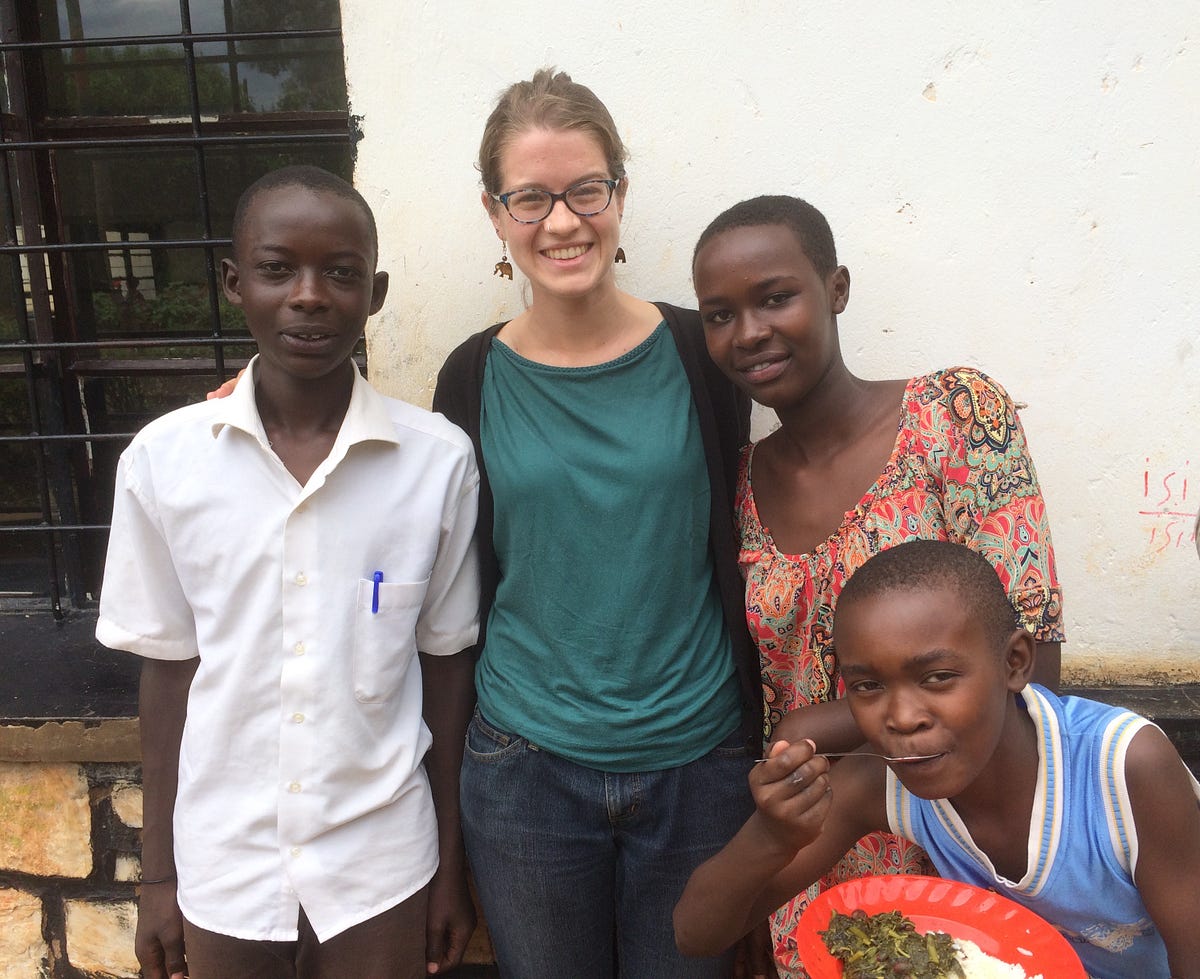
Leslie Massicotte
Alice Rowan Swanson fellow Leslie Massicotte, an alumna of , works in Kigali, Rwanda, with the youth center Mind Leaps. The center aims to give at-risk youth a place for education, training, and fun. Massicotte, an ESL teacher, saw increasing numbers of pregnancies among the young women at the center, so she used the Swanson Fellowship support to bring sexual and reproductive education to Mind Leaps.
“The whole idea is to use the money to start the teaching, but to make the project sustainable and able to run without my help,” she says. Leslie sees this effort as a natural outgrowth of studying with SIT. “My passion for giving back, serving others, and being abroad came together at SIT.”
Read more about Massicotte’s work here.
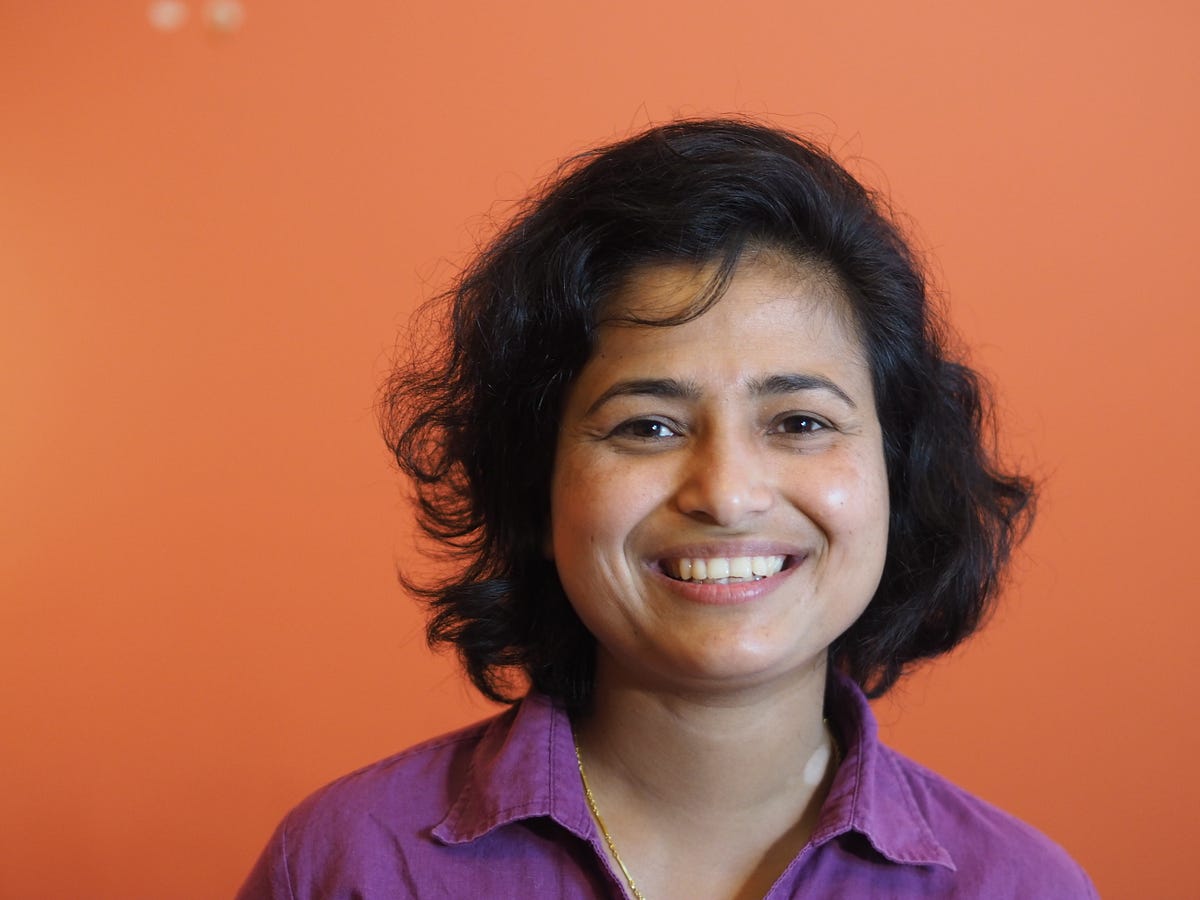
Suman Pant
Suman Pant, academic director of in the Himalaya, strives to show students how the currents of gender and development intertwine in Nepal. Her PhD dissertation examined Nepal’s community forestry, in which women play a key role. “This idea of conservation emerges from eco-feminism theories. In Nepal, community forestry is very interesting because that’s the only platform where the national law mandates that there should be more women board members than men.”
Such ideas are relatively new to Nepal, Pant explains. “Thirty years ago, when education was still scarce and a little bit expensive, men went to school. Women didn’t. The illiteracy rate among women was very, very high. Now when you go to schools you’ll see — in primary schools, secondary schools — girls and boys [are] almost an equal percentage. I think Nepal’s case in terms of gender is very interesting because it has transitioned quite a bit, and at a fast pace and quite healthily, too.”
See a video of Pant discussing her program.
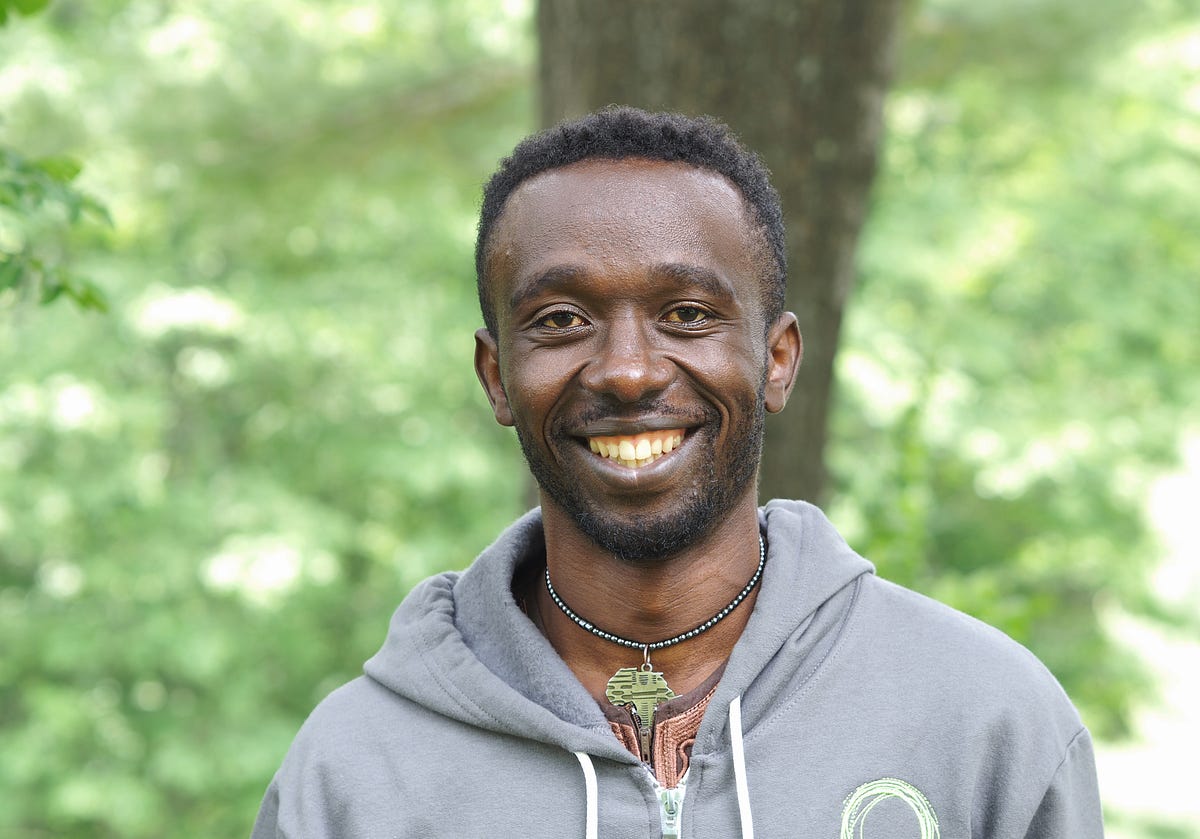
Sunday Justin
Sunday Justin has ties both to SIT Study Abroad and SIT Graduate Institute. He’s an alumnus of the , and academic coordinator for . He’s part of our list for International Women’s Day for his women-focused work.
Rwanda’s civil war and genocide left many women who had become pregnant through rape. Sunday co-founded Iteme Foundation, which aims to support and empower not only the victims of rape, but also young mothers for whom prostitution has become a dangerous way out of poverty that often leads to pregnancy or HIV infection.
Being a single mother, Sunday says, “comes with a stigma. It comes with a judgment; it comes with a lot of conflict between them and their family and their children.”
is part of SIT’s OnSITe podcast series.
Vicky Garcia
Vicky Garcia and Mary Hensley met in the early 2000s as International Management students at SIT Graduate Institute. After graduating from SIT, Garcia returned to her native Philippines, joining forces with Hensley to bring a new kind of economic security to the indigenous rice farmers of the Cordillera region of the Philippines. Building that kind of empowerment among indigenous farmers made sense to Garcia not only as a farmer’s daughter, but as someone who’d overcome physical and cultural challenges. She had contracted polio as a child and was left unable to walk.
Despite being told she’d never amount to anything because of her disability, Garcia eventually worked for the Philippine government, then came to the United States to attend SIT. Back home, she made her way to the very remote steppes of the Cordillera, where she has since helped farmers get assistance from the government and connected them to customers all over the world who appreciate the unique heirloom species of rice they grow. She runs Rice Inc. with Hensley.
Listen to their story .
91¾«Ʒ alumni return to their communities and, using their new skills, networks, and small grant funding, become changemakers.
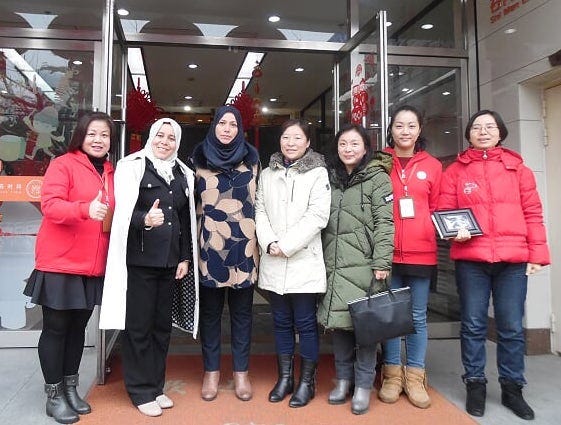
Nacira Amari
Nacira Amari has dedicated her career — which has taken her from mathematics professor to politician and director of an education institution — to creating new opportunities for women in Algeria. Amari joined the , which provides academic and hands-on training to civil society leaders from across the Middle East and North Africa. There, she built her network and gained practical skills by working at the Arab Institute for Woman at Lebanese American University.
Those new skills have helped her make a difference. In 2017, Amari to the Saida city council, where she has worked to increase women’s representation in government and to open schools that provide women with job skills training. She continues to urge other women to lead in their communities, too. “Women are [stronger] by developing themselves and then changing their society,” she says. “Victory is the ally of women who give others a better life.”
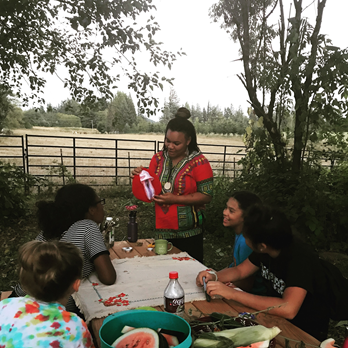
Allie Dyer
Former Fulbright U.S. student to Ghana Allie Dyer — along with other black, indigenous and leaders of color— noticed that health education was failing young women of color in their community of Portland, Oregon. They set out to change that. In 2017, Dyer earned a small grant to co-launch the program Brown Girl Rise. She did so after participating in the New Frontiers of Global Public Health seminar organized by U.S. Alumni Ties, which brings together alumni of U.S. government-sponsored exchange programs to learn about critical issues and collaborate with fellow alumni.
Brown Girl Rise leads health education and radical empowerment workshops rooted in community and culture for young girls and women in Portland. They discuss sisterhood and safe spaces, explore their historical connections to food and land, and share how racial and gender stereotypes impact how they view their bodies. “What we’ve learned is the holistic power of community — that community itself can be healing,” Dyer .
Brown Girl Rise is funded through an small grant from the U.S. Department of State, with funding provided by the U.S. government and administered by 91¾«Ʒ.
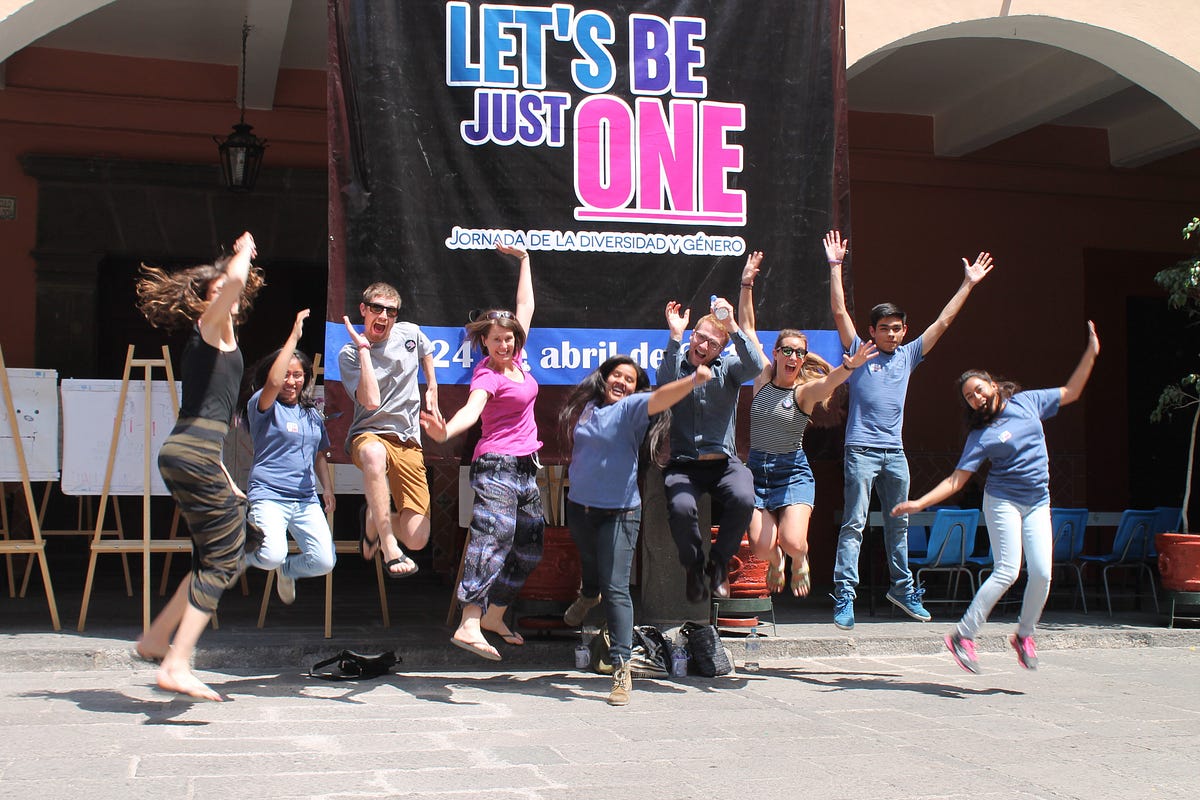
Alitzel Castillo, Jazmín Villalobos, Roberta S. Jacobson, Gladys Del Ángel, and Emmanuel Galindo
Violence against women is a serious problem facing communities around the world. In Puebla, Mexico, one group of high school students banded together to tackle that problem. In 2016, Alitzel Castillo, Jazmín Villalobos, Roberta S. Jacobson, Gladys Del Ángel, and Emmanuel Galindo took part in Jóvenes en Acción, a U.S. Department of State exchange program that builds civic engagement and leadership skills among students in Mexico. As part of the program, participants carry out projects in their communities.
These high schoolers launched a campaign to raise awareness about gender violence and the stereotypes that perpetuate it. “We knew that we had to make teenagers see that gender violence does not look just like some guy hitting a woman, or like street harassment,” Castillo writes in an email, “it looks more ‘familiar’ for all of us because we live surrounded by stereotypes and gender roles.” The students offered a series of workshops exploring gender stereotypes, LGBTQ issues, and sexual harassment, culminating in a Diversity and Gender Day, which brought more than 700 people for activities devoted to gender and inclusion.
is sponsored by the U.S. Department of State with funding provided by the U.S. Government and administered by 91¾«Ʒ.
Experiment in International Living alumni return home transformed — and channel that transformation into their high schools and communities.

Yareni Murillo
Yareni Murillo has been an activist since her freshman year when, as one of few Latinas in a mostly white high school, she sought ways to connect with other students and founded the school’s first Hispanic Club. “I realized that if no one else is going to speak for me, then I have to speak up for myself,” she says.
Last summer, Yareni traveled to India with The Experiment — an experience she describes as the best in her life. Visiting a new country with a diverse, all-female group led to empowering discussions about intersectionality and patriarchy.
Yareni is now working on a digital history project about Mexican-American women in the Chicano movement, who are often overshadowed by men. She brought a sign to this year’s Women’s March in Washington, DC, that read, “If your feminism doesn’t include all women, then it’s not feminism.”

Hayeon Kayla Lee
Hayeon Kayla Lee went to Japan as a high school freshman, in part to confront some deeply held family beliefs. Some of her relatives experienced Japanese imperialism in South Korea during World War II and still harbored very negative opinions about Japan.
“I always feel that the way to solve conflict and interact with others is through learning the background and history of a culture you might not understand,” says Hayeon, now a senior at a boarding school in New Hampshire. That summer in was a turning point that helped Hayeon begin to separate her own views from her family’s.
When she’s at home in Los Angeles, Hayeon tutors students in her inner-city neighborhood, focusing on helping girls from low-income and immigrant backgrounds improve their English and creative writing.
As for her own education, in college Hayeon wants to study abroad again — in Japan.

Lauren Jasper
Lauren Jasper used to notice the Ujamaa Collective storefront in her Pittsburgh neighborhood, but didn’t know much about the nonprofit until last year, when the aspiring architect took a class at her high school called Global Leadership by Design. That’s where she found out about Ujamaa’s mission to create entrepreneurship and education opportunities for Africana women.
The same year, Lauren went to South Africa on The Experiment’s program — an experience that ultimately drew her closer to Ujamaa’s purpose and her own. South Africa’s history of apartheid and social justice resonated with her, and the leadership aspect of the program was particularly important to Lauren, who knows she’ll need those skills in a the United States, where only 400 black women have ever been licensed as architects.
As a busy senior, Lauren still finds time to help in the Ujamaa boutique and create programming for teens. Through her architecture studies at Cornell, she hopes “to carry social justice into my designs to create affordable and sustainable housing.”